
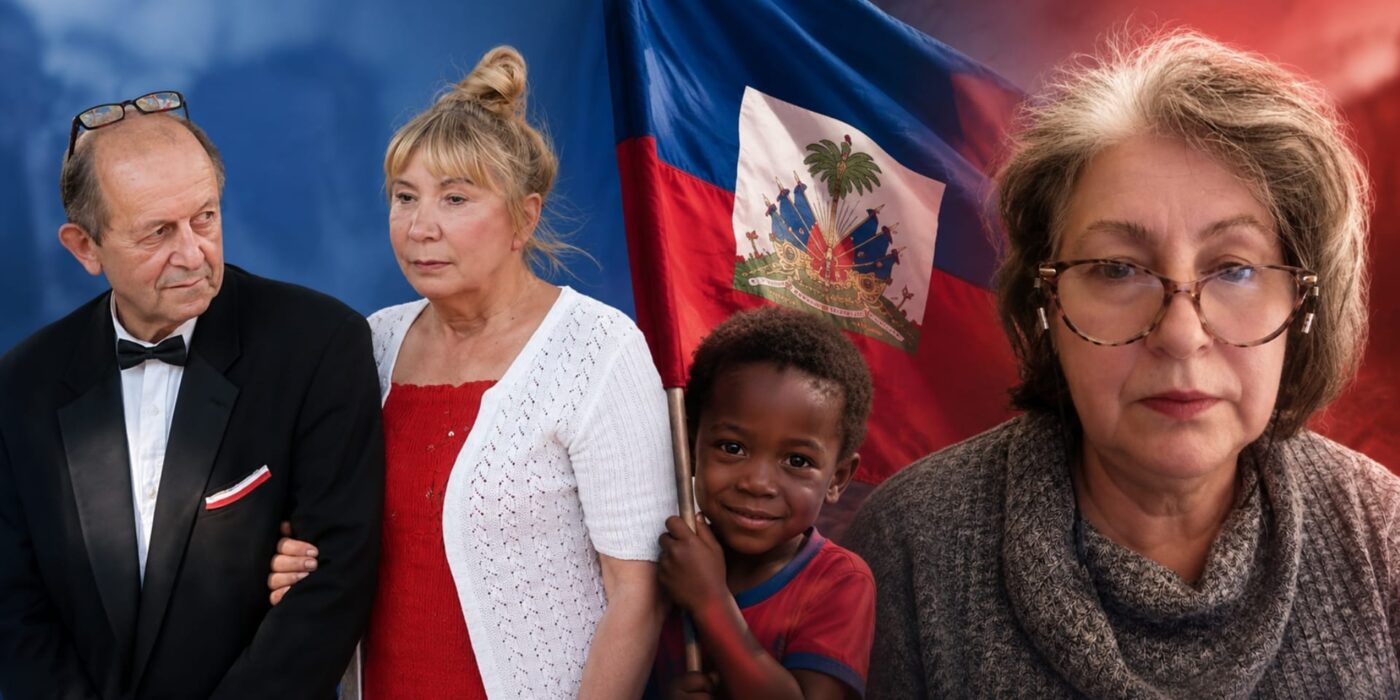
The history of Cazale is extraordinary. More than 200 years ago, Polish legionnaires arrived in Haiti after being sent with Napoleon’s troops to the island of Saint-Domingue. They were supposed to take part in suppressing an uprising of enslaved people fighting against French colonizers. Some of the Poles, however, saw in the fighting Haitians people who – just like themselves – longed for freedom and independence.
After Haiti gained independence in 1804, some of the surviving Poles remained on the island. Their stance was recognized in Haiti’s first Constitution. Their descendants still live there today, including in Cazale – a town that has become one of the most remarkable testimonies to the shared Polish-Haitian history.
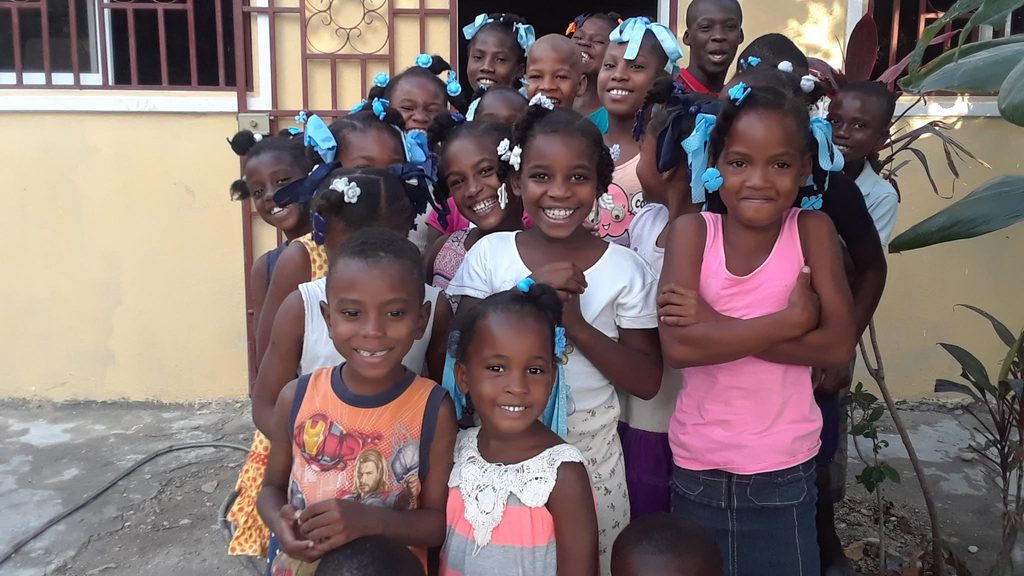
More than two centuries later, Polish culture once again began to play a role in the lives of local children and young people. They learn the Polish language, sing Polish songs, and discover the dances, history and traditions of their ancestors’ country. A children’s television project, CazaleTVPologne, was also created, with young creators documenting the life of the local community and recording interviews with older residents.
Many of these initiatives are led by Krzysztof “Christopher” Szybiński and his wife Elżbieta Szybińska, who arrived in Haiti in 2014 and began working in Cazale in 2015.
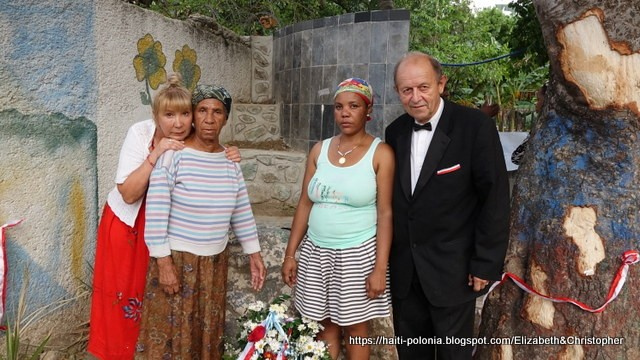
Over time, Małgorzata Kilanowicz joined the project – a volunteer, French language specialist, translator and coordinator of Polish language classes.
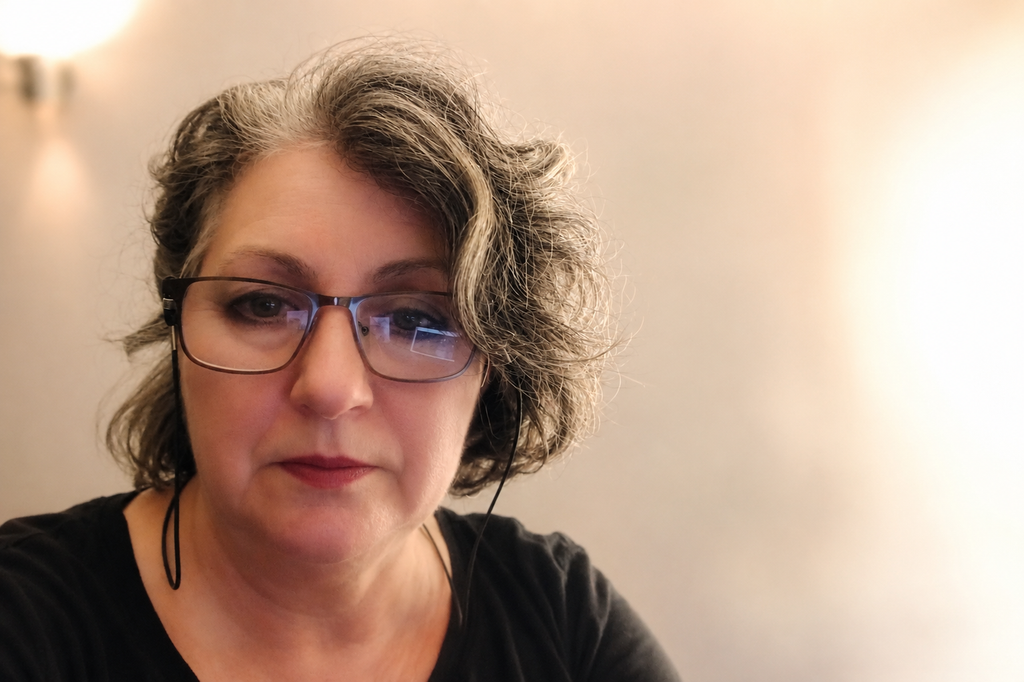
We talk with them about Polish traces in Haiti, young people who want to learn the language of their ancestors, dreams of studying in Poland, and a school that, despite extremely difficult conditions, is trying to give its students a chance for a better future.
Krzysztof Szybiński: My wife Elżbieta and I spent about 35 years traveling across all seven continents, looking, among other things, for traces of Polish communities abroad. Antarctica was really the only place where we did not find them.
In 2014–2015, while fulfilling our son’s final wish, we traveled across Haiti. That was when we reached Cazale, where many residents have Polish roots. Since we are Polish ourselves, we established relationships very quickly.
We made films, conducted interviews and got to know the residents. As a longtime member of the Polish Scouting Association ensemble “Gawęda,” I began, together with Elżbieta, to teach children Polish songs and dances – at first simply in the streets.
In 2019, the Embassy of the Republic of Poland provided the school in Repairer of the Breaches with part of the equipment needed for a satellite connection, making Internet access possible and, above all, enabling online learning.
Later, we received help with premises from the Catholic parish, from Brother Pascal, the priest of St. Michael’s Catholic Church. It was in this church, in 2018, that a two-hour concert was held as part of the Days of Solidarity of Poles with the Polish Community in Haiti. Forty artists from Cazale took part in the event, singing Polish songs and presenting Polish dances.
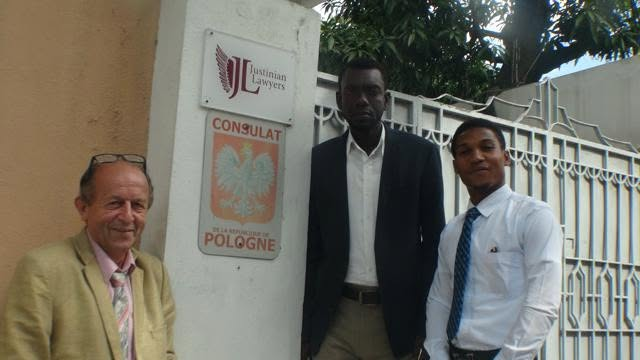
At that time, we hosted representatives of the Haitian authorities, the Polish consul from Bogotá and Haitian journalists. That was also when we established contact with the Repairer of the Breaches school, especially with its wonderful director, Derismont Mesius Roobens, who led the concert. We also visited schools and the Community Cultural Center. We conducted classes, supported schools financially and with equipment, and began building contacts with Poland. It was then that we also established contact with the Repairer of the Breaches school through its wonderful director, Derismont Mesius Roobens.
Małgorzata Kilanowicz: My story is completely different. I met Christopher in a hospital emergency department while waiting for a medical consultation. His stories captured the attention of practically the entire waiting room.
I asked him for his email address and later wrote to him because I thought that, as a French language specialist, I might be useful. And, in fact, I was.
It turned out, however, that we had to start with the basics – the simplest Polish words and phrases. Christopher had previously begun teaching through songs. We still need to wait a little before introducing the poetry of Julian Tuwim, but we are on the right track.
Technically and organizationally, we are supported by the Centre for the Development of Polish Education Abroad – ORPEG. For years, we covered the remaining costs ourselves, organizing fundraisers and contributing our own private funds.
Krzysztof Szybiński: While traveling around Haiti, we saw places of extreme poverty that were truly heartbreaking. But there were also places where residents had the means to take care of their homes and surroundings.
This was often possible thanks to members of multigenerational families working abroad. Some were building houses in Haiti that they planned to return to. Cazale was one such place.
Krzysztof Szybiński: In a small chapel by St. Michael’s Church, there is an image of Our Lady of Częstochowa – the Black Madonna. Residents still feel a special connection to her.
Many people with Polish roots showed us family photographs. We took part in long evening conversations about their family histories. We have collected an enormous archive of films and interviews with residents.
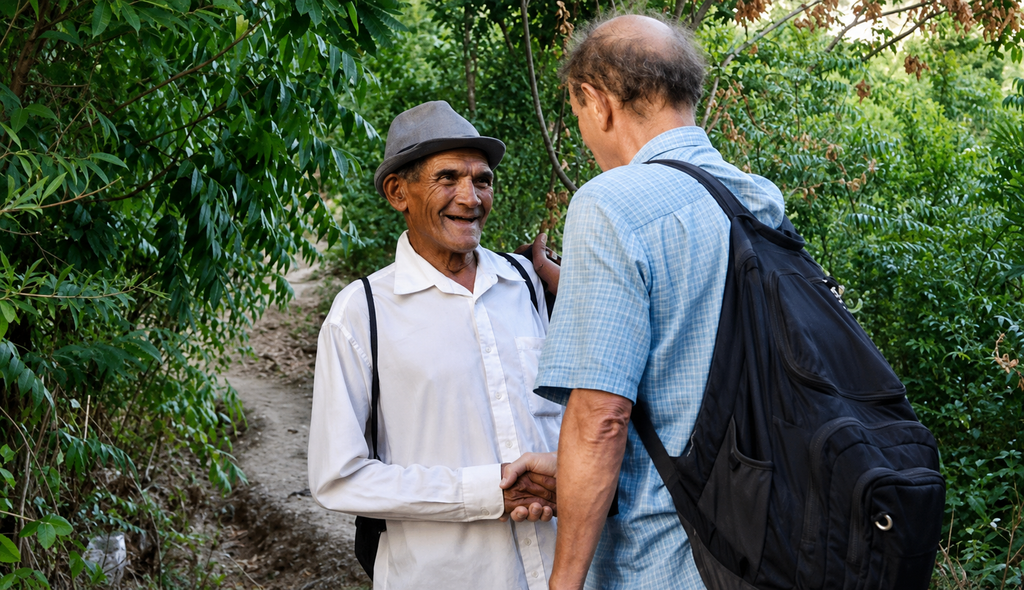
Unfortunately, the Polish language did not survive in any form. That is why one of our greatest wishes was to begin teaching it again – first through play, and later in an organized way at school.
Małgorzata Kilanowicz: People there live in such difficult conditions that it is hard to expect them to focus only on sentimental feelings connected with history, but they are proud of their origins and willingly talk about the extraordinary lives of their ancestors.
Interestingly, Haitians can be very distrustful of white foreigners, which has historical reasons. However, I have heard many times that when they learn that the person they have met is Polish, the situation can change completely. Christopher is called a “brother” there.
The average Haitian does not know very much about Poland. But our students already know much more. For them, Poland is not only a language. It is also songs, dances, symbols, history and geography. https://www.facebook.com/plugins/video.php?height=476&href=https%3A%2F%2Fwww.facebook.com%2Freel%2F1742444116917224%2F&show_text=false&width=267&t=0
Krzysztof Szybiński: The school’s director, Derismont Mesius Roobens, comes from a large family. His brothers and sisters left to work abroad. He too was repeatedly encouraged to leave.
However, he decided to stay. He told me that he wanted to create a private school that would provide an excellent education to the future citizens of Haiti – so that one day they might even take part in governing their own country.
That statement won our hearts.
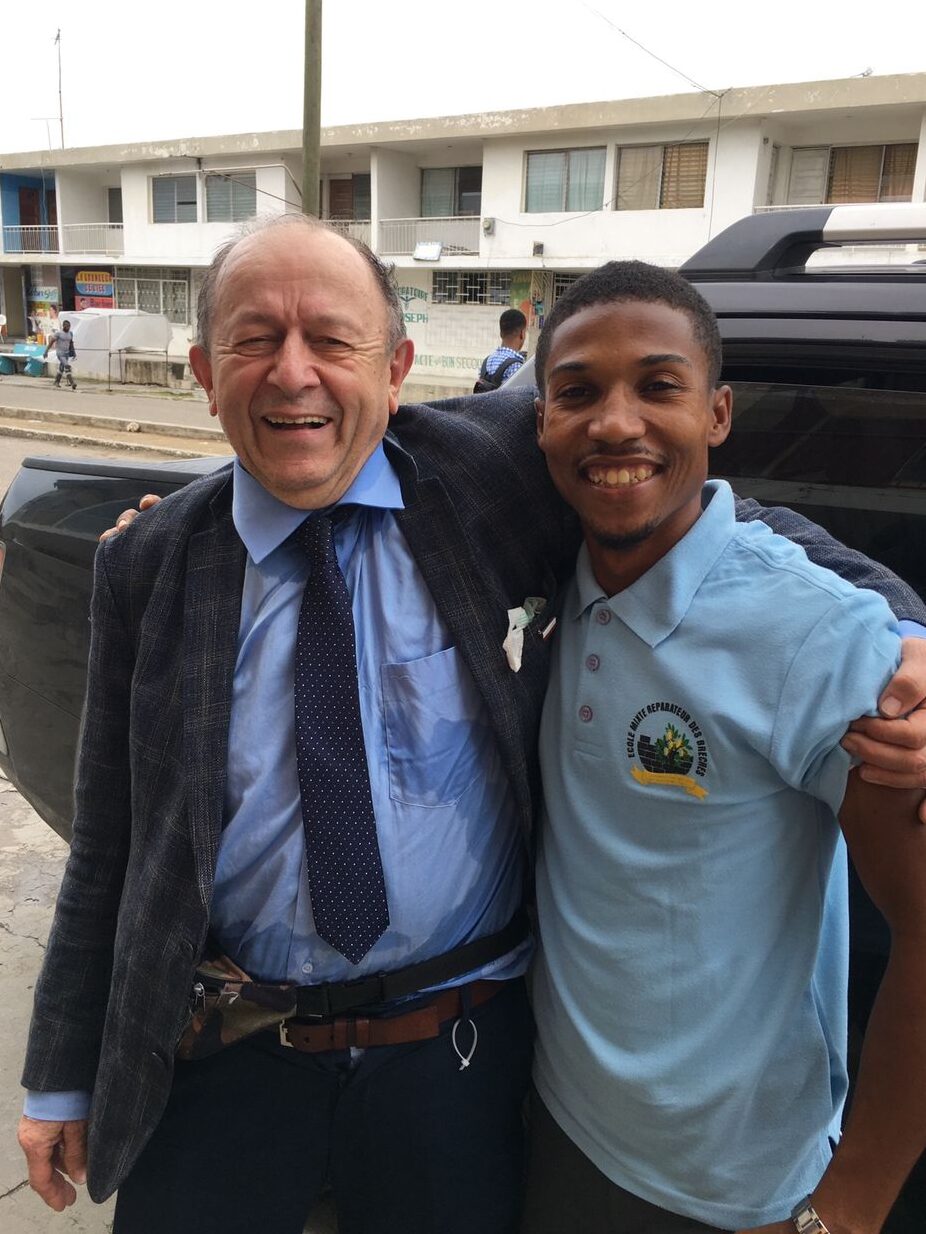
Krzysztof Szybiński: We are trying to revive the forgotten Polish community in Cazale and sustain the younger generation’s interest in the country of their ancestors. https://www.facebook.com/plugins/video.php?height=476&href=https%3A%2F%2Fwww.facebook.com%2Freel%2F1206323944810355%2F&show_text=false&width=280&t=0
We introduced activities that develop imagination through drawing and painting, classes in Polish dance and singing, and we created the children’s television project CazaleTVPologne. We established cooperation with Polish schools whose students exchanged drawings and recordings with children from Cazale.
We also introduced some Polish traditions, such as decorating Easter eggs, as well as gatherings to mark Polish Independence Day.
In cooperation with the school, we funded plaques commemorating the contribution of Polish legionnaires to the fight for Haiti’s independence. The school also helped prepare the Memorial Site of St. John Paul II. The Haitian Joel Lorque was the author and executor of this project in 2022. The project also became a symbol of Polish-Haitian friendship.
Małgorzata Kilanowicz: Interest in Poland was born again. It was embraced by the children – today already young adults, more open to the world.
Through songs, films and stories, they saw that the world does not always have to be hostile and unfriendly. It can also bring help, joy and hope.
Małgorzata Kilanowicz: At first, they enjoyed the singing activities the most. Young people love to have fun, so the classes were cheerful, interesting and completely different.
Polish is not just another school subject for them. These are extracurricular and optional classes. Students stay longer at school and also study at home, for example by preparing dialogues. It is their own choice.
Today, we conduct classes in difficult conditions and on outdated equipment. The small screen does not even allow us to show a film to the entire class. Fortunately, the students’ interest is not fading.
Małgorzata Kilanowicz: The school is supported by foreign foundations and Haitians living abroad. Today, however, that support is insufficient.
The school provides a free lunch every day to about 425 students – from preschool through primary, vocational and secondary school. The meals are funded by the Moon Day Project organization.
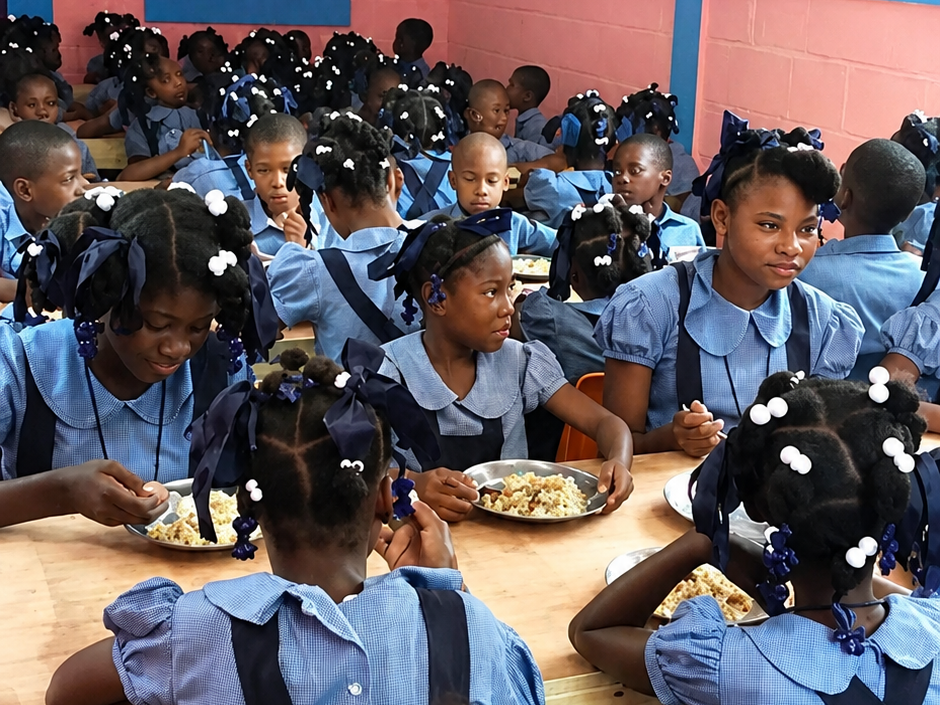
For some children, the free meal is unfortunately the main motivation for attending school regularly. When we started, the cost of one such meal was less than a dollar. Today it is about five dollars, and practically everything is in short supply.
The fact that this school continues to operate and achieves excellent educational results is almost a miracle.
Krzysztof Szybiński: I created my first children’s television project in Poland back in 2004. For years, I worked in photography and film, and working with children and young people has always been very close to my heart.
My personal motivation was also to fulfill the dream of my son Kamil, who wanted to travel to Haiti. Sadly, he died tragically. I am convinced that if he were alive, he would be supporting me in creating CazaleTVPologne.
I wanted the children in Cazale to learn the secrets of filmmaking and to have the opportunity to work with semi-professional equipment. And that is exactly what happened.
Krzysztof Szybiński: Yes. They conducted interviews, created reports and short film productions – from writing scripts and storyboards, through organizing the film set, all the way to editing.
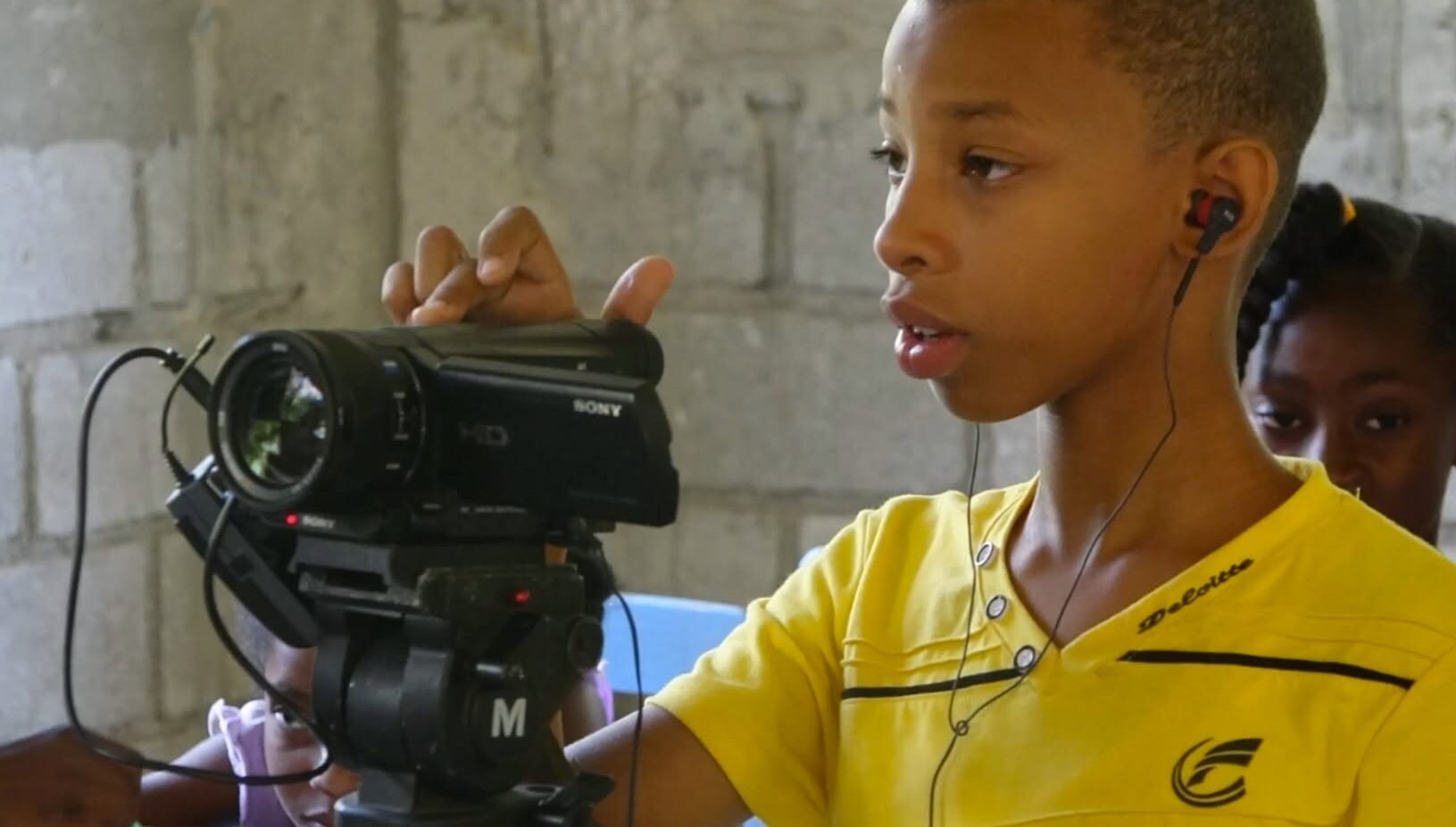
During subsequent classes, they changed roles. They worked as scriptwriters, camera operators, sound technicians, reporters and editors. They edited the materials on Mac computers using Adobe Premiere Pro.
I was enormously impressed by their commitment and ideas. They achieved excellent results very quickly. They especially loved working with the camera out in the field.
Hundreds of films have been collected on the cazale99 channel.
Since 2023, however, CazaleTVPologne’s activities have been suspended. The reason is not only the lack of funds and my absence from Haiti, but above all safety concerns. Under current conditions, simply filming with a camera can pose a danger.
Krzysztof Szybiński: The interviews with older residents were especially interesting. Over time, we began conducting them bilingually.
If the person being interviewed did not speak English, the reporter translated the questions into Creole or French, and then translated the answers into English.
This will make it much easier to use the archive in the future. Most importantly, many of the people with whom these conversations were conducted are unfortunately no longer alive.
Małgorzata Kilanowicz: I think so. They were incredibly interested in and excited about the television project.
We hope that when the situation becomes calmer, we will be able to return to filming. Christopher is concerned that the skills the children have already acquired, including editing skills, may be forgotten, and that after years of exposure to the local climate, the equipment will require maintenance or replacement.
Małgorzata Kilanowicz: We have not yet been able to create such a classroom. We are working on it, but we cannot manage it on our own.
Hundreds of films documenting school activities and interviews with residents are waiting to be processed. Television classes, computer programming for children using tools such as Scratch, dance classes and choir activities are currently suspended. The money needed to maintain them has run out.
Małgorzata Kilanowicz: Since then, we have become more visible. ORPEG mentions our school on its websites, and recordings of lesson excerpts and students’ statements appear there. The fact that the students speak Polish attracts particular interest. https://www.facebook.com/plugins/post.php?href=https%3A%2F%2Fwww.facebook.com%2Forpeg%2Fposts%2Fpfbid0LVpwHdmsNp6piFVLCWYyS1sp4pTiFmsTV6yAreJE4M3cVeWML5Uqgh78msmPqHaQl&show_text=true&width=500
Małgorzata Kilanowicz: If we are talking about the school itself, the problems are financial, space-related and equipment-related. The second problem – and perhaps the most important one today – is ensuring the safety of students and teachers.
Safety is the priority.
Despite this, we are looking toward the future. We would like to expand the curriculum with additional subjects. My dream is for the Repairer of the Breaches secondary school to one day become bilingual – a school where a student could choose the language of instruction and, for example, study biology in Polish. We hope that, through cooperation with the Centre for the Development of Polish Education Abroad, we will be able to achieve this one day.
Małgorzata Kilanowicz: Without question, it could change their lives. So far, we have not been able to secure a full academic scholarship in Poland. The University of Łódź offered a 50 percent reduction in tuition fees, but the remaining costs are still unimaginably high for these young people.
Another problem is formally confirming Polish ancestry. More than 200 years have passed, and documents that could prove it often no longer exist (the Duvalier massacre of 1969, whose commemoration Christopher helped prepare, is one example. Church archives were said to contain documents related to these events; however, during ethnic purges many of them were burned and lost forever in fires, while residents themselves destroyed documents out of fear for their lives).
In the common, anthropological and historical understanding, the people of Cazale are part of the Polish diaspora. In strictly legal terms, the situation is much more complicated because state administration does not apply discretionary recognition.
Małgorzata Kilanowicz: We need to build and equip a multimedia room for remote learning and secure independent Internet access. We need computers, a projector, cameras and microphones that would make individual contact with students possible.
A multimedia room is our greatest dream. It could also serve as a small television studio.
Because we cannot be there physically, we have to rely on technology. And this is exactly where the biggest shortages are.
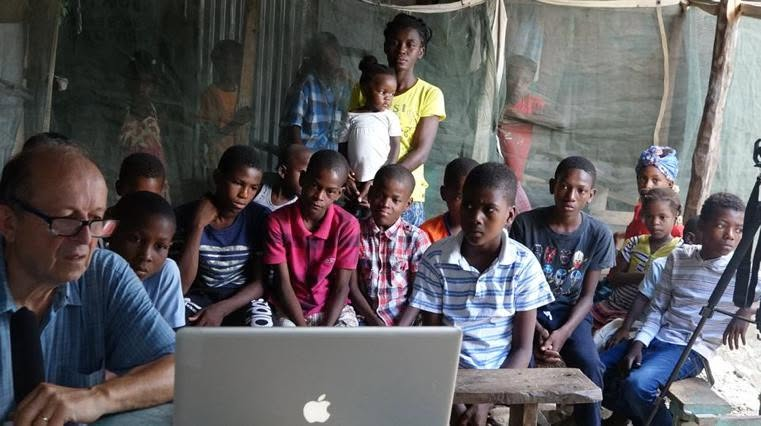
Schools in Poland have tablets, projectors, interactive whiteboards and permanent broadband Internet access. We have four tiny, very old laptops and an Internet connection that constantly drops.
We want to develop artistic activities connected with Polish culture, teach programming and once again expand the children’s television project. We also dream of a virtual library of textbooks and bilingual editions of Polish literature, art and film.
We would also like to make it possible for graduates to continue their education in Poland.
One graduate was accepted into a preparatory course for studies in Poland. We managed to pay for one such course, and there are many more interested students.
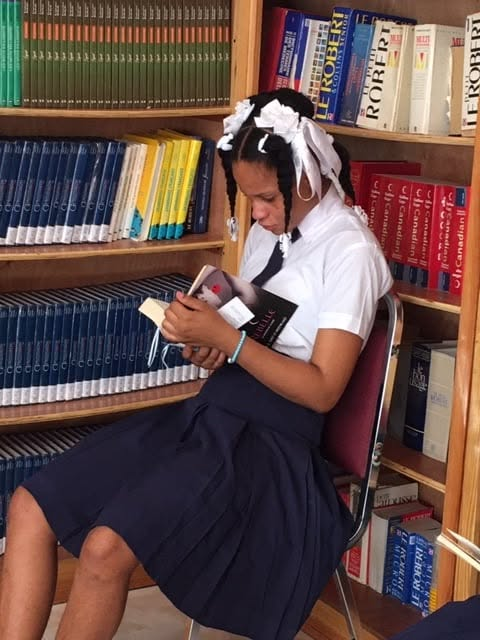
There are 26 secondary school graduates, and all of them attended a Polish language course. All of them want to study in Poland. Dozens of other students are waiting for better classroom conditions and equipment because they would also like to start learning Polish. There is no longer enough room for everyone in the small library room. https://www.facebook.com/plugins/video.php?height=312&href=https%3A%2F%2Fwww.facebook.com%2Freel%2F26862865403408420%2F&show_text=false&width=560&t=0
Małgorzata Kilanowicz: The students’ dreams are the same as the dreams of young people in Poland. They want to learn, develop and have a chance for the future.
Our dream is to create conditions that will allow them to achieve better results. Above all, we need equipment, technology, stable Internet access and the goodwill of people who care.
Krzysztof Szybiński: Yes. Everything.
They were inspired by films about Poland and by materials received from students at two Polish schools that cooperate with us.
Krzysztof Szybiński: The greatest achievement is that we managed to get the students interested in our activities.
But something else needs to be said about these young people. They genuinely want to make an effort.
They want to discover new things and they love competing with one another. When we were learning Polish songs, a girl would sometimes come to me and ask for help because she wanted to sing as well as the best soloist. Later, another girl would come and say: “Christopher, help me. I want to sing better than everyone else.”
And they were singing, among other things, songs by Anna Jantar with music performed by the Polish Symphony Orchestra.
Małgorzata Kilanowicz: From my point of view, a tremendous success has been the launch of regular, professionally prepared Polish language classes – twice a week for two hours – which ORPEG provides for us, as well as the school’s own commitment to maintaining ties with Poland.
Małgorzata Kilanowicz: The average Pole knows very little about this. I myself only learned about Cazale a few years ago.
One of the first things I came across was the story of a performance of Stanisław Moniuszko’s “Halka” in the main square of Cazale (February 2015). I saw photographs of opera singers wearing traditional Polish kontusz coats, surrounded by Black children and grazing goats.
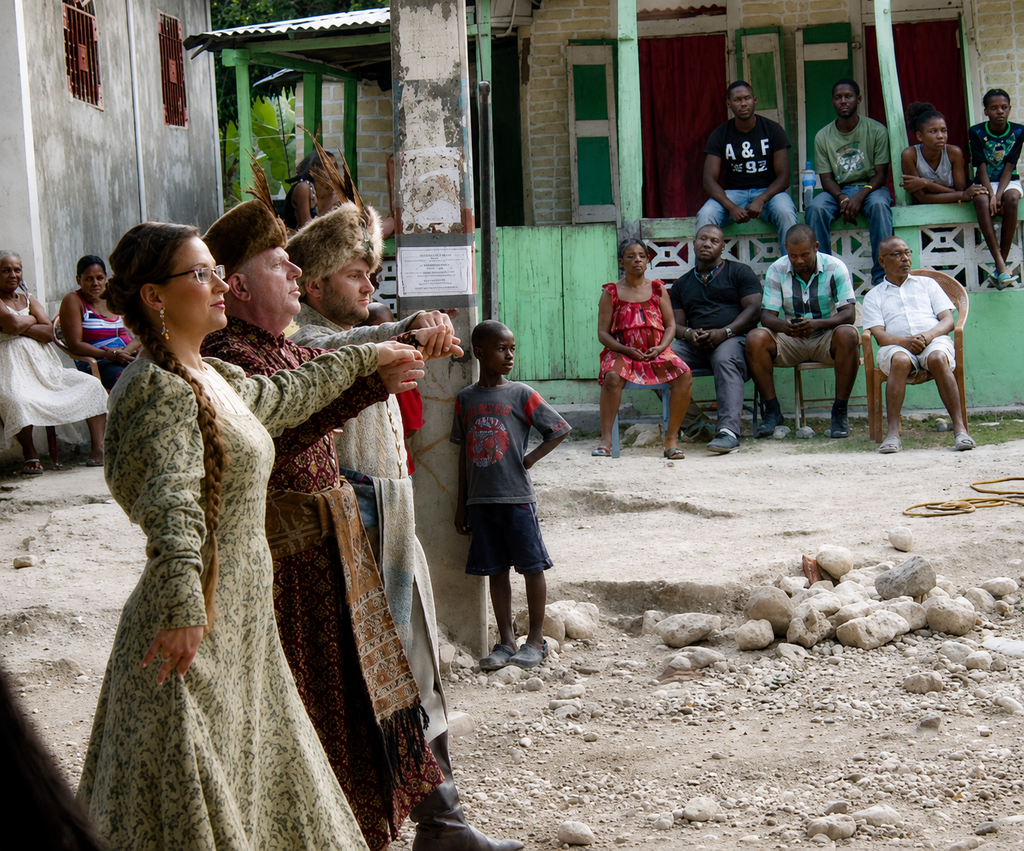
That was when I understood how extraordinary this place must be.
I tried to imagine what the Polish legionnaires would have felt if, 200 years ago, they could have seen a Polish opera performed there. They must have suffered deeply from homesickness and alienation. They had no chance to return to their homeland or their loved ones.
Haitians remember the Poles. The Polish contribution to the victory of the revolution is a recognized part of their history and is taught in schools. In Poland, we hardly teach this history at all.
We want the Repairer of the Breaches school in Cazale to become a leading center bringing together people interested in Poland and Polish culture. We would also like to see an association created for Haitians with Polish roots.
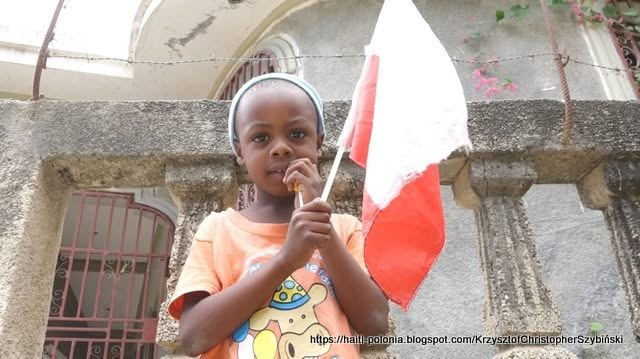
Małgorzata Kilanowicz: In my view, one of the best ways to honor the sacrifice of our forgotten heroes from more than 200 years ago is to help their descendants gain an education today and give them opportunities for development comparable to those available to young people in Poland.
We owe it to them.
Krzysztof Szybiński: We should also remember that the Poles who survived and remained there had nowhere to return to. Poland had been partitioned. Haiti became their new home.
Małgorzata Kilanowicz: Cazale was established 200 years ago on land granted by the newly formed Haitian authorities. Its name most likely comes from a combination of the words Kay – meaning house – and Zalewski – the House of Zalewski – which over time became Ka-zal and eventually today’s Cazale. The shared Polish-Haitian history is still being written there.
Above all, we need to preserve the newly awakened curiosity about the country of their ancestors – a country that for many years seemed to them more like a legend than a real place.
Today, they are beginning to ask questions about their origins and family histories. They ask why their grandfather was named Mubensky, where their ancestors came from and what their own history is.
We need to open a window to the world for them. Through education, cooperation with peers in Poland, mutual understanding and collaboration, they may one day be able to use the knowledge they gain to help rebuild their suffering and devastated country.
Fundraiser: Scholarships for young people of Polish descent from Cazale, Haiti | Grzegorz Iwaniczko

More information about activities supporting the residents of Cazale, ongoing projects and the daily life of this extraordinary community can be found on social media. We encourage you to visit the website as well as the profiles on Facebook and YouTube, where updates, photos, videos and materials documenting Polish-Haitian history and initiatives undertaken for the children and young people of Cazale are published.



Dodaj komentarz
Musisz się zalogować, aby móc dodać komentarz.